
Okay, quick confession: I used to dread installing yet another wallet extension. Really. My browser looked like a crypto accessory shop—extensions piled up, permissions everywhere, and my gut said “nope.” Whoa. Then I clicked on Rabby, and things got… different.
At first glance it’s just another Chrome/Firefox extension. But something felt off about the usual flow—too many warnings, too little clarity. My instinct said look closer. So I dug in. Initially I thought it was just another UX polish job, but then I realized Rabby intentionally solves friction points that matter to DeFi power users: clear transaction simulation, per-site account isolation, and predictable gas controls. Hmm… that’s the part that hooked me.
Here’s the thing. Installing a wallet is a trust decision as much as a tech one. You’re granting a small program the keys to move money on your behalf (well, with your signature). Seriously? That’s heavy. On one hand you want convenience; on the other, you need safety and transparency. Rabby pushes often-overlooked nudges toward safer behavior, so I kept going.
I’ll be honest: the install was smoother than expected. The extension prompts are straightforward, and the onboarding walks you through key creation and secure seed export without treating you like a total newbie or talking down to you. There’s a bit of breathing room—no flashy marketing promises, just simple choices and clear warnings. Oh, and by the way… the interface feels American-midwest practical: not flashy, but reliable.
Installation: What To Expect (and What I Tripped Over)
Download, add to browser, create a new wallet or import. Those are the bullet points. But in practice, two small things matter. One: seed backup. Rabby nudges you to save the seed before you proceed. That sounds minor, but it’s huge—I’ve seen very very important losses from skipped backups. Two: network switching. Rabby keeps networks explicit and prevents some accidental cross-chain mistakes, which is a common pain point for power users juggling L2s and sidechains.
Okay, so a short practical checklist:
– Install the extension from the store.
– Create/import wallet and secure seed.
– Review permission prompts for each site.
– Enable any hardware wallet integration if you use one.
My honest tip: use a fresh browser profile for major holdings, or at least a tightly controlled extension set. Seriously. It reduces attack surface. My instinct said this before I even read docs—just felt safer that way.
Transaction Simulation: Why It’s a Game Changer
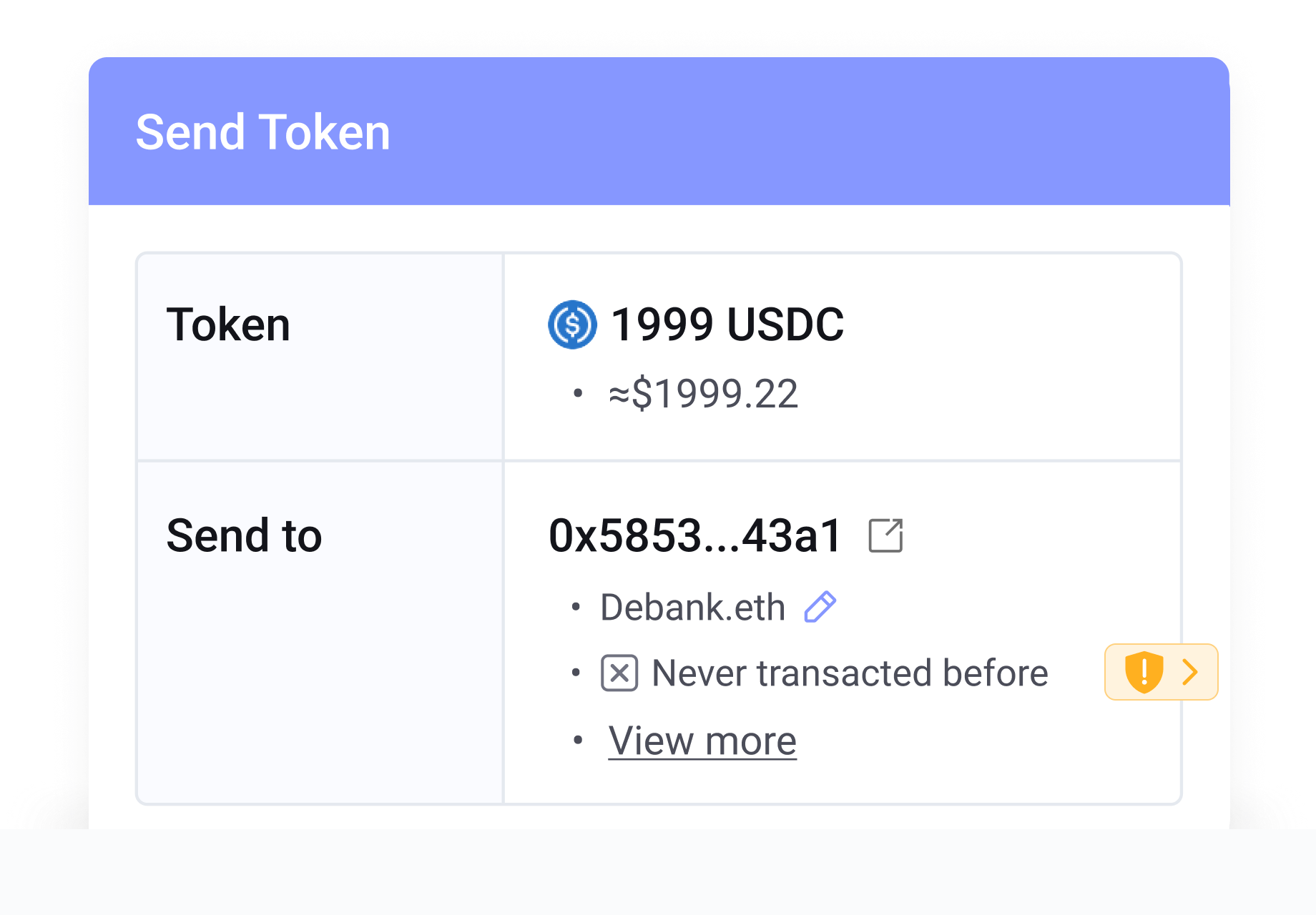
Check this out—Rabby simulates transactions before you sign. That matters. Most wallets just show a summary: amount, gas, approve/confirm. Rabby breaks down the call, shows token movements, and warns about suspicious approvals. Wow. Real transparency. For active DeFi users, that lowers cognitive load and reduces mistakes.
On one hand, simulation can be imperfect—smart contracts are complex and the simulation might not foresee on-chain state changes between simulation and broadcast. Though actually, Rabby pairs simulation with clear caveats, and it surfaces the most relevant risk signals so you can make an informed call. Initially I thought it was overkill; then I watched it flag a scammy approve request that would have drained funds. That was an “aha!” moment.
Longer thought: transaction simulation doesn’t eliminate risk, but it shifts risk from blind guessing to reasoned judgment, which is exactly what power users need when they’re juggling tactical moves across multiple chains and liquidity pools.
Multi-Chain, Multi-Account—Without the Mess
Rabby’s multi-chain handling is pragmatic. It supports common EVM chains and a number of L2s, and switching feels intentional rather than accidental. That matters when you hop between mainnet, Optimism, Arbitrum, zkSync, and sidechains—because accidental network mismatch is a real headache (and sometimes a real cost).
Also, I liked the account isolation: you can create separate accounts for different strategies (staking, trading, cold storage) and keep them logically partitioned. This is simple but very effective for people who think in use-cases rather than single wallets. I’m biased, but I prefer a wallet that nudges me into safer habits instead of making everything flat and monolithic.
Security Features That Feel Real
Rabby isn’t trying to be a vault with every feature possible. Instead, it prioritizes actionable protections: transaction simulation we already mentioned, granular permission controls, and hardware wallet compatibility. Those three things together make me more comfortable approving complex DeFi ops.
One caveat: no software is impregnable. I’m not 100% sure that any extension-only setup is perfect. So pair Rabby with a hardware wallet for serious holdings, use separate browser profiles, and keep seeds offline. Those are practical hedges—workable, not preachy.
FAQ
How do I install Rabby wallet extension?
Install from your browser’s extension store (Chrome/Firefox usually). Add the extension, create or import your wallet, and securely back up your seed phrase. Pay attention to permission prompts and enable hardware wallet support if you have one.
Is Rabby safe for DeFi transactions?
Rabby adds meaningful safety via transaction simulation and permission controls, which reduce common mistakes. That said, combine it with standard best practices—hardware wallets, separate profiles, and offline seed storage—for higher security.
Where can I learn more about it?
If you want to check it out, here’s a helpful resource: rabby wallet. It’s a natural place to start, with practical install guidance and feature highlights.
Final thought: wallets are tools shaped by trade-offs. Rabby leans toward usability and actionable safety for DeFi users. It won’t fix every risk vector—nothing will—but it does make everyday DeFi activity less error-prone and more intelligible. I’m cautiously optimistic. Something about that pragmatic approach bugs me in a good way—it’s not flashy, but it makes me trade and stake with fewer U-turns and fewer “oh no” moments.
LEAVE A COMMENT